.png)
How Often Do You Actually Need Facial Massage to See Real, Lasting Results?

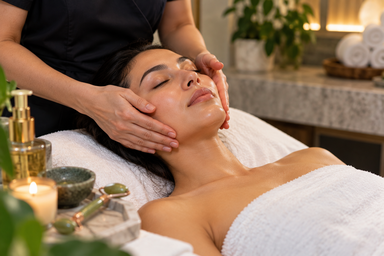
Facial massage has become one of those treatments everyone seems to be talking about, from gua sha tools sold online to microcurrent devices promising an at home facelift. But somewhere between the trend and the technique, a practical question tends to get lost. How often do you actually need to do this for it to make a real difference, and does it matter whether you are doing it yourself or having it done professionally?
At Sol Aesthetics in Chandler, Arizona, this is one of the questions we get asked most, usually by clients who have already tried a jade roller at home and want to know if they are doing enough, or if it is time to consider something more consistent and professionally guided.
What Is Facial Massage Actually Doing to Your Skin and Muscles?
Facial massage works on a few different levels at once. It stimulates circulation, which can bring more oxygen and nutrients to the skin's surface. It supports lymphatic drainage, helping to reduce puffiness and fluid retention. And depending on the technique, it can also help release tension held in the small muscles of the face, which contributes to a more relaxed, lifted appearance over time.
The tricky part is that these benefits are cumulative rather than instant. A single session can leave your face looking noticeably brighter and more sculpted right afterward, but the deeper, longer lasting changes, like improved muscle tone and reduced chronic tension, depend heavily on consistency.
Does Facial Puffiness Come Back If You Only Get Massage Occasionally?
Often, yes, particularly if the puffiness is tied to ongoing habits like high sodium intake, allergies, or long hours at a desk. Facial massage helps move fluid that has already accumulated, but if the underlying cause is still present, that fluid will gradually build back up over the days following your session. This is why occasional, sporadic massage tends to produce temporary results, while a more regular rhythm helps keep fluid moving before it has a chance to accumulate again.
Can Facial Massage Really Help With Muscle Tension and Tightness?
Yes, and this is where technique matters quite a bit. Chronic tension in the jaw, forehead, or cheeks, often related to stress or clenching, tends to respond best to a combination of consistent manual work and time. A single session can offer noticeable relief, but the muscles that have been holding tension for months or years typically need repeated sessions to fully retrain that pattern.
What Is the Difference Between Gua Sha, Microcurrent, and Manual Massage Techniques?
This is a question we hear constantly, since these terms often get used interchangeably even though the techniques work quite differently.
How Does Gua Sha Facial Massage Work?
Gua sha uses a smooth, flat tool to apply firm, gliding pressure across the skin, which helps stimulate circulation and lymphatic drainage while also working on fascia and muscle tension. It tends to produce an immediate, visible de-puffing and sculpting effect.
What Does Microcurrent Facial Massage Do Differently?
Microcurrent uses very low level electrical currents to stimulate the facial muscles directly, similar to a workout for the muscles beneath the skin. Over time and with consistency, this can support improved muscle tone and a subtly lifted appearance.
Is Manual Massage Without Tools Still Effective?
Yes, manual techniques performed by a trained esthetician can address circulation, lymphatic flow, and muscle tension without any tools at all, relying instead on precise pressure and movement patterns tailored to your specific areas of concern.
Each of these approaches has value, and many professional treatments actually combine more than one technique in a single session to address multiple concerns at once.
How Often Should You Get Professional Facial Massage for Lasting Results?
For clients dealing with chronic puffiness, tension, or a desire for ongoing facial contouring, we generally recommend starting with more frequent sessions, often weekly or biweekly, to establish momentum, and then shifting to a maintenance schedule of once or twice a month. This mirrors how most bodywork and massage therapy is approached, since consistency tends to produce more meaningful, lasting change than infrequent, one off sessions.
At Sol Aesthetics, our Crystal Gua Sha Energy Ritual and Gua Sha Glow Ritual both offer this technique as part of a broader, relaxing session designed to sculpt and de-puff the face. For clients specifically interested in the muscle toning benefits of microcurrent, our Microcurrent Lift Ritual is built around a series approach, since this technique in particular tends to show its best results with consistent, repeated sessions over several weeks.
Is It Better to Rely on At Home Tools or Professional Treatment?
At home tools like jade rollers and gua sha stones can be a nice addition to your routine between professional visits, and we generally encourage clients to use them if they enjoy the ritual of it. That said, at home tools cannot replicate the precision, pressure calibration, and technique variation that a trained esthetician brings to a session, especially when it comes to addressing specific concerns like chronic tension or stubborn puffiness. Think of at home tools as maintenance between visits rather than a replacement for professional work.
Can Facial Massage Be Combined With Other Treatments for Better Results?
Absolutely, and this is actually one of the more effective ways to approach facial massage. Combining it with treatments like Hydrafacial or radio frequency tightening can amplify results, since the massage supports circulation and product absorption while the other treatment addresses a different layer of the concern. Our Radiant Ritual is a good example of this, fusing Hydrafacial with gua sha for a treatment that hydrates, brightens, and sculpts in a single appointment.
What Should You Realistically Expect Over Time?
If you commit to a consistent facial massage routine, whether weekly for the first several sessions or as part of a monthly maintenance rhythm, most clients notice improved circulation, reduced puffiness, and a more relaxed, sculpted appearance to the face within the first month. Muscle tone improvements from techniques like microcurrent tend to take a bit longer, often building visibly over six to eight weeks of consistent treatment.
Consistency Is the Secret Nobody Wants to Hear
The honest answer to how often you need facial massage is that it depends on your specific goals, but the underlying truth is the same across the board. Consistency matters more than any single session, no matter how skilled the hands performing it. A regular rhythm of professional facial massage, supported by simple at home habits between visits, is what actually produces the sculpted, de-puffed, relaxed look most people are chasing.
If you are ready to build that rhythm, explore our full range of rituals or visit our contact page to schedule your first session at our Chandler, Arizona studio.
Updated August 2026
Frequently Asked Questions
How often should I get a facial massage for the best results? Many clients start with weekly or biweekly sessions to build momentum, then shift to a maintenance schedule of once or twice a month for lasting results.
Is gua sha or microcurrent better for facial massage? They work differently. Gua sha offers immediate de-puffing and sculpting through manual pressure, while microcurrent focuses on gradually toning facial muscles over a series of sessions.
Can I do facial massage at home instead of seeing a professional? At home tools can support your routine between visits, but they cannot fully replicate the precision and technique variation a trained esthetician provides for specific concerns.
Does facial massage help with puffiness long term? Yes, especially with consistent sessions, since regular massage helps keep lymphatic fluid moving before it has a chance to build back up.
Can facial massage be combined with other treatments like Hydrafacial? Yes. Combining facial massage with treatments like Hydrafacial can enhance results by supporting circulation and product absorption alongside deeper hydration and exfoliation.