.png)
What Is the Best Way to Remove Facial Hair in Chandler, Arizona?

If you have ever caught the light hitting your cheeks or upper lip just right and noticed a soft shadow of peach fuzz staring back at you, you are not alone. Facial hair, even the fine, barely there kind, is one of the most common skin concerns women bring up at their appointments, and it is also one of the most misunderstood. Between at home razors, waxing appointments that leave skin red for a day, and threading sessions that pull more than they polish, most people in Chandler have tried at least two or three methods before finding one that actually works for their skin and their schedule.
This guide breaks down what is really happening when you deal with facial hair, why some removal methods backfire, and how a single professional treatment can handle both the fuzz and the dullness underneath it. It is written for anyone who wants a straightforward answer, whether you are prepping for an event this weekend or just tired of guessing.
Updated September 2026
Why Do I Have Noticeable Facial Hair in the First Place?
Facial hair growth is almost always driven by genetics, hormones, or both, and it is completely normal for adult women to have some visible vellus hair on the cheeks, jawline, and upper lip. Hormonal shifts from stress, birth control changes, pregnancy, or simply aging can make that fine hair thicker or more noticeable over time. For most people it is not a medical issue at all. It is just biology, and it responds well to the right cosmetic approach rather than anything drastic.
Does Stress Actually Make Facial Hair Worse?
Chronic stress raises cortisol, and elevated cortisol can influence hair growth patterns along with oil production and breakouts. This is one reason people juggling demanding jobs and packed calendars sometimes notice more visible facial hair or more clogged pores during particularly stressful stretches. It is rarely the sole cause, but it is a real contributing factor worth mentioning to whoever is doing your skin consultation.
What Are the Most Common Facial Hair Removal Methods, and What Are the Downsides?
Shaving, waxing, threading, and depilatory creams are the most common at home or salon options, and each comes with tradeoffs in irritation, ingrown hairs, or how long the results actually last. Shaving is fast but has to be repeated every few days and can leave skin looking rough under makeup. Waxing and threading pull hair from the root, which lasts longer, but they can cause redness, tiny breakouts, or irritation, especially on sensitive skin. Depilatory creams use chemicals that dissolve hair, which sounds convenient until you factor in the strong odor and the risk of a reaction.
None of these methods do much for the skin itself. They remove hair and leave everything else, dullness, buildup, uneven texture, exactly as it was.
Is There a Treatment That Removes Hair and Improves the Skin at the Same Time?
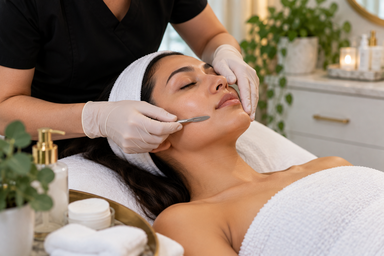
Yes, and it is one of the most requested rituals at Sol Aesthetics for exactly this reason. Dermaplaning uses a sterile surgical blade to gently glide across the skin at an angle, lifting away both the fine vellus hair (commonly called peach fuzz) and the top layer of dead skin cells in a single pass. There is no pulling, no chemicals, and no downtime, which is part of why it has become such a popular choice for facial hair removal among clients who want a smoother finish without the irritation that comes with waxing or threading.
The Dermaplane Glow ritual at our Chandler studio pairs this technique with a calming, spa style experience, so you are not just getting rid of unwanted hair, you are also walking out with brighter, smoother, more even toned skin. Makeup glides on more evenly afterward, and skincare products absorb better since there is no longer a layer of dead skin and fine hair sitting on top.
Who Is a Good Candidate for Professional Facial Hair Removal?
Dermaplaning works well for most skin types and is especially popular with people who have dry or dull skin, visible peach fuzz, or dullness they cannot quite fix with products alone. It is generally not recommended for those with active acne breakouts, since the blade can spread bacteria across inflamed areas, so an in person consultation is the best way to confirm it is right for you.
Is Dermaplaning a Good Option for Busy Professionals?
For working professionals who do not have room in their schedule for repeated waxing appointments or the redness that follows them, dermaplaning is particularly appealing. The treatment itself typically takes under an hour, there is zero recovery time, and you can go straight from your appointment to a client meeting, a video call, or dinner plans with fully camera ready skin. Many of our Chandler clients build it into a lunch break or schedule it right before a big presentation week, since the glow tends to peak within a day or two and there is nothing to hide in the meantime.
How Long Do Results Last, and How Often Should You Book?
Results typically last three to four weeks before fine hair starts to grow back in, which is similar to a typical skin cell turnover cycle. Because the treatment also exfoliates, most clients notice their skin looks brighter for longer than that, even after the hair itself starts returning. Booking it monthly, similar to a facial, keeps both the hair and the texture consistently in check rather than letting either build back up.
Will My Hair Grow Back Thicker or Darker?
This is one of the most persistent myths around facial hair removal, and it is not true. Shaving off the surface of a hair does not change its thickness, color, or growth cycle at the root. Vellus facial hair regrows the same fine texture it had before, so there is no risk of ending up with coarser or darker hair after dermaplaning.
How Does Dermaplaning Fit Into a Broader Skincare Routine?
Dermaplaning works well on its own, but it also sets the stage for other treatments to perform better. Because it strips away the outer layer of buildup, serums and moisturizers absorb more effectively immediately afterward, and it pairs especially well with a HydraFacial Glow or a Chemical Peel Renewal for clients who want a more dramatic reset. If you are dealing with breakouts alongside unwanted hair, our team may recommend starting with an Acne Healing Facial first to calm the skin before introducing a blade based treatment.
Why This Matters More Than It Seems
Facial hair is such a small, quiet thing to feel self conscious about, but it shapes how confident people feel in photos, on video calls, and just looking in the mirror before they leave the house. Choosing a professional route over trial and error at home is not about vanity. It is about finding a solution that actually works with your skin instead of against it, and walking away with results you do not have to think about again for a month.
The Glow Up Nobody Warned You About
Most people expect facial hair removal to be a simple maintenance task, not something that leaves their whole face looking brighter. That is the part clients are usually most surprised by after their first Dermaplane Glow session at our Chandler studio. If peach fuzz and dull texture have been on your mind, book a consultation or explore our full list of rituals to see what fits your skin and your schedule.
Frequently Asked Questions
Is professional facial hair removal painful? No. Dermaplaning is typically described as feeling like a light scraping sensation, similar to a razor, with no pain and no needles involved.
Can I wear makeup right after treatment? Yes, many clients apply makeup immediately after their session, and most say it goes on smoother than usual since the skin's surface is freshly exfoliated.
How is this different from shaving at home? A professional treatment uses a sterile surgical blade at a precise angle to remove both hair and dead skin cells evenly, which is harder to replicate safely with a standard razor at home.
Is this treatment safe for sensitive skin? Most sensitive skin types tolerate it well since there are no chemicals involved, though a consultation helps confirm it is the right fit for your specific skin.
How soon will I see results? Results are visible immediately after your session, with the smoothest, brightest look typically settling in within a day or two.